post antibiotic protocol I’d use on myself and child
Note that none of this is intended to be medical advice. I am sharing personally how we approach & support antibiotic usage in our family.
I want to start by saying that in our household, antibiotics are absolutely a last line of defense and we do not take them lightly. Antibiotics can be life-saving and sometimes you cannot avoid them and we are thankful to have access to them if required. With that being said, antibiotics are over-prescribed. A study of children born in the U.S. (private insurance cohort) found that by age 5, 91 % had received at least one antibiotic course, with a mean of about 6.8 total antibiotic courses per child by age 5. That means only 9 out of 100 children has zero antibiotic exposure before age 5 and the average child received almost 7 antibiotic courses before age 5.
Western research is finally starting to catch up to what many of us functional practitioners have been saying and studying for years: The importance of a well balanced, robust GI Microbiome is PARAMOUNT for our overall health, immune function, and greatly impacts our mental health as well.
When we take antibiotics, we deeply disturb that microbiome as they do not discriminate and nuke good AND bacteria. This impacts adults, of course, but especially young children as their microbiomes are still being built in toddlerhood and childhood. That doesn’t mean antibiotics have no place, it means there should always be a risk assessment when giving them.
I recently got a very bad cold that almosssttt turned into a sinus infection and I almost got antibiotics before it cleared up. A week later I almost got mastitis and almost had to take them again (Blog post coming on treating that!) Since I’m still breastfeeding, I was already thinking what I may add in to reduce the effects on both myself and son so thought I’d share for anyone else!
For adults
Take a probiotic while taking the antibiotics and for 4-6 weeks after. Note that probiotic should be taken at least 2-3 hours in between antibiotic dose
I like this brand for the antibiotic period and would finish 1 whole bottle.
For Women, I’d then do 1-2 bottles of This probiotic. Personally, this is my preferred maintenance probiotic for women and I have taken this for a few years! I often use spore based probiotics when working with clients but don’t always find them to be the most gentle, so I typically will layer those in when we’re doing other GI work. If you’re looking for a spore based, my go-to is Megasporebiotic by Microbiome Labs and I’d use that for men!
For Children
Especially for younger children and infants, Smidge Infant Probiotic is incredible. When we dealt with thrush issues in early postpartum we used this and it helped so much.
Dr Green Mom also has a great probiotic for infants and children. I’d use this for older kids who can take a capsule.
Keeping Yeast in check
Anytime we use antibiotics, some sort of yeast support should be given. Bacteria and fungi (yeast) keep each other in check and when we go in and nuke bacteria, it gives yeast a really good opportunity to overgrow (this is why yeast infections post antibiotics are so common) I would always add in the below when taking antibiotics and for a couple of weeks after. The dosing is from Dr. Noah of Supreme Nutrition.
Scutellaria Tincture (for kids not old enough for capsules) :
20 pounds 2-5 drops 3x per day
30 pounds 2-6 drops 3x per day
50 pounds 5-10 drops 3x per day
100 pounds 10-25 3x per dayScutellaria capsules (for parents, breastfeeding mothers, pregnancy safe) - 1 pill 2-3 daily
Adults can always request a fluconazole prescription as well!
Additional Microbiome supports (Food is medicine!!)
Lots of fermented foods! Kefir, Saurkraut, high quality yogurt, fermented pickeles
Gut healing foods: Bone broth, slow cooked meats, cooked vegetables
Reduce sugar, alcohol & processed food consumption,
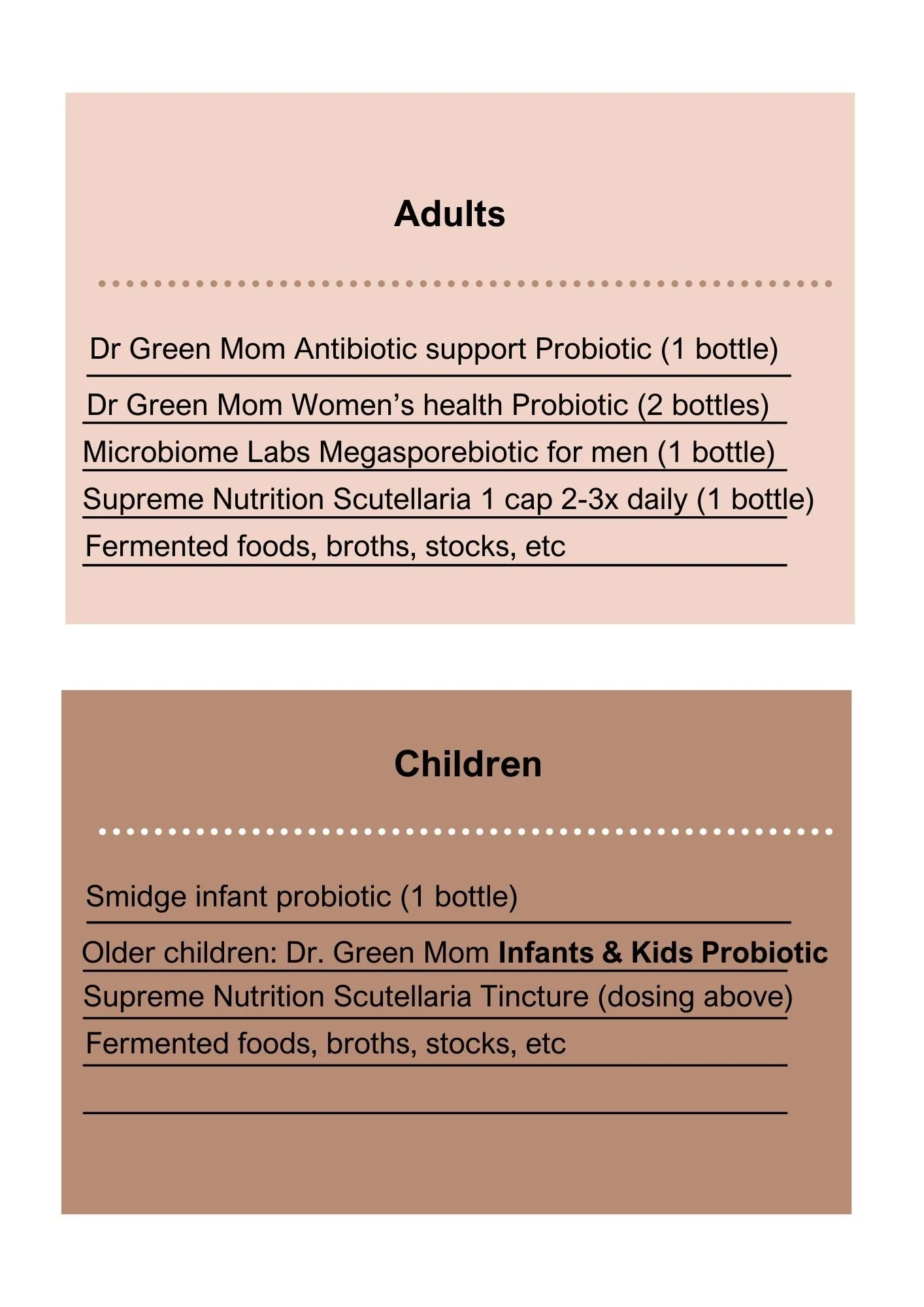
I would do supports for 4-6 weeks post antibiotics!